Showing posts with label microsoft. Show all posts

Tuesday, September 9, 2014

Fox announcers screw up description of Microsoft Surface Pro 2 during NFL telecast

No comments:

Fox announcers screw up description of Microsoft Surface Pro 2 during NFL telecast
Early last month, we told you about the $400 million deal signed between Microsoft and the NFL. Under the terms of the deal, each NFL stadium will have a fleet of modified Microsoft Surface Pro 2 tablets that would be handed out to coaches during each NFL game. The slates replace the Polaroid cameras that teams often used on the sidelines and in the press box in order to capture various views of the opponent's offensive and defensive formations.

The tablets, protected from impact by a heavy duty blue case, were spotted during telecasts of Sunday's opening weekend of games. Unfortunately, Fox must have decided not to make sure that their announcing crews understood exactly what the Surface Pro 2 is, and what it does. For example, during Sunday's contest between New Orleans and Atlanta,  Saints Quarterback Drew Brees was spotted on the sidelines, looking at one of the Surface Pro 2 tablets. The announcers in the booth described the tablets as "iPad-like tools."

No doubt that infuriated the guys in Redmond. When you shell out  $400 million and agree to supply a number of your tablets to every NFL stadium, you expect to get some positive promotional value out of it. Instead, it was Apple that received the free mention. No doubt Fox announcers are getting a crash course in tablets this week before next weekend's slate of games.

  • Home
  • News
  • Fox announcers screw up description of Microsoft Surface Pro 2 during NFL telecast

Fox announcers screw up description of Microsoft Surface Pro 2 during NFL telecast

Posted: , by Alan F.
Fox announcers screw up description of Microsoft Surface Pro 2 during NFL telecast
Early last month, we told you about the $400 million deal signed between Microsoft and the NFL. Under the terms of the deal, each NFL stadium will have a fleet of modified Microsoft Surface Pro 2 tablets that would be handed out to coaches during each NFL game. The slates replace the Polaroid cameras that teams often used on the sidelines and in the press box in order to capture various views of the opponent's offensive and defensive formations.

The tablets, protected from impact by a heavy duty blue case, were spotted during telecasts of Sunday's opening weekend of games. Unfortunately, Fox must have decided not to make sure that their announcing crews understood exactly what the Surface Pro 2 is, and what it does. For example, during Sunday's contest between New Orleans and Atlanta,  Saints Quarterback Drew Brees was spotted on the sidelines, looking at one of the Surface Pro 2 tablets. The announcers in the booth described the tablets as "iPad-like tools."

No doubt that infuriated the guys in Redmond. When you shell out  $400 million and agree to supply a number of your tablets to every NFL stadium, you expect to get some positive promotional value out of it. Instead, it was Apple that received the free mention. No doubt Fox announcers are getting a crash course in tablets this week before next weekend's slate of games.


source: TheVerge via MicrosoftNews via WMPoweruser
Continue Reading...

Monday, September 8, 2014

How Apple And Google Crushed Windows Phone

No comments:

iPhone 5s outpaces Galaxy Note 4 in this improvised speed comparison 

Summary

  • Apple has set the standard for smartphones with its 64 bit processors and true 64 bit mobile operating system.
  • This dashed any hope Microsoft had of positioning Lumia as a premium brand and forced it to compete with Android as a commodity smartphone.
  • The result has been declining shipments and market share for Windows Phone.
  • The purchase of Nokia was the wrong move that leaves Microsoft with almost no chance to be competitive or establish a viable smartphone ecosystem.
Yesterday Microsoft (NASDAQ:MSFT) unveiled some new Lumia devices, most prominently the Lumia 830, dubbed the "affordable flagship." Affordable it may be, but flagship is a bit of a stretch. For more than a year, the flagship category has been put out of reach by Apple's (NASDAQ:AAPL) superior 64 bit mobile processors, dashing Microsoft's hopes of having a premium smart phone brand. This left Microsoft with no choice but to slug it out with Google's (NASDAQ:GOOG) (NASDAQ:GOOGL) Android in the commodity smartphone market, a battle that has left Windows Phone bruised, bleeding and all but dead.

SmartPhone OS Market Share

IDC's recently published data on smartphone market share underscores the severity of the fall of Windows Phone. For more than a year, Nokia, Microsoft's principal Windows Phone partner, has been absent from IDC's list of top five smartphone manufacturers, so it was difficult to gauge how far Windows Phone had fallen, but IDC's August 14 announcement broke down the market by operating system:
Operating System2Q14 Shipment Volume2Q14 Market Share2Q13 Shipment Volume2Q13 Market Share2Q14/2Q13 Growth
Android255.384.7%191.579.6%33.3%
iOS35.211.7%31.213.0%12.7%
Windows Phone7.42.5%8.23.4%-9.4%
BlackBerry1.50.5%6.72.8%-78.0%
Others1.90.6%2.91.2%-32.2%
Total301.3100%240.5100%25.3%
Windows Phone didn't merely suffer a market share decline in Q2, but a real decline in unit shipments year over year. This data has been confirmed by Microsoft's quarterly earnings report, which showed that only 5.8 million Nokia Lumia phones were shipped in the quarter.
I often hear Microsoft supporters affirm that Windows phone has achieved 3rd place among smartphone operating systems, which had been Microsoft's stated objective. But MS got third place by default as BlackBerry (NASDAQ:BBRY) sales collapsed, as the numbers above demonstrate.
Throughout 2013, Windows Phone gained market share, even passing Blackberry to take third place by Q2, according to Gartner data. The new standard set by iPhone 5s at the high end of the market and increasingly "premium" Android phones at the lower end of the market halted Microsoft's momentum by Q2 of this year.

Paradigm Failure

The failure of Windows Phone to achieve sustainable growth and profitability is fundamentally a failure of the commodity PC paradigm that Microsoft attempted to apply to the mobile device category. When Windows Phone 7 was introduced at the end of 2012, it's clear that Microsoft still assumed that the PC paradigm would work for smartphones: Microsoft would be the creator/owner of the operating system that it would license for a fee to an ecosystem of hardware vendors. These vendors would flood the market with Windows Phones at various price points, and like the commodity PC juggernaut, crush everything in their path.
From the start, this model started to fall apart. As the price for its participation in Windows Phone, Nokia had received a subsidy from Microsoft that canceled the license fees that Microsoft would have received for its phone OS. This was necessitated by the need to compete with Google's free Android operating system, which conferred a cost advantage to Android device makers. If Microsoft hadn't been willing to subsidize the OS for Nokia, Nokia would have gone with Android.
So the dynamics of the market had already been skewed away from the commodity licensing model that Microsoft had hoped to impose. But there was another fundamental dynamic that was changing. In the PC licensing model, hardware technology leadership rested with the chip maker, specifically Intel. The integrated mobile device makers such as Apple and Samsung (OTC:SSNLF) had seized this leadership in a paradigm shift away from the commodity chip makers, a shift that is still underway.
When Apple introduced its first custom designed SOC's (for the first iPad), numerous industry pundits predicted that this was merely an aberration, and that the commodity chip makers would eventually reassert their dominance. This just hasn't happened. Mobile device makers such as Samsung and Apple simply have become too powerful and too well funded.
Apple's introduction of its custom designed 64 bit A7, and its subsequent effect on iPhone sales and the smartphone market, demonstrate the strength of the new paradigm: integrated device makers designing their own ICs, which are then fabricated by third party foundries. Almost a year later, the fact that the only other 64 bit mobile processor in production is by Samsung shows the power of the new paradigm.
Commodity chip makers such as Intel (NASDAQ:INTC) and Qualcomm (NASDAQ:QCOM) are still scrambling to catch up. Qualcomm is expected to roll out its first 64 bit processors in 2015, and Intel? Here's what I believe happened to Intel. At the beginning of the year, Intel was expected to roll out the phone version of Bay Trail, Merrifield, which would have been Intel's 64 bit smart phone processor based on its 22 nm process. Merrifield has been a no show, and Intel execs didn't even want to talk about it at the Q2 conference call. I believe Intel backed off of the Merrifield roll out because they realized that it would also require contra-revenue subsidies to achieve any significant market penetration. This might have added another $1 or $2 billion in loss to their mobile devices division, and Intel management decided they simply couldn't afford it.
The lack of any effective response to the A7 from the commodity chip makers meant that Microsoft couldn't really play in the premium smart phone space. Instead, Lumia phones feature Qualcomm SOCs, which are nice, but they're last year's tech.

Forms of Integration

Microsoft's attempt to become an integrated device maker through its purchase of Nokia demonstrates a realization that the PC commodity paradigm had failed it. Unfortunately for Microsoft, it embraced the wrong form of integration. Apple has already demonstrated what works: designing your own custom SOCs. This provides the most leverage to device makers in order to create discriminators for their products. Being able to assemble your own devices is not actually an important discriminator and probably confers no competitive advantage. It's best left to contract manufacturers such as Hon Hai (Foxconn).
If Microsoft embraced the wrong form of integration with the purchase of Nokia, what chance does Microsoft have of making Windows Phone competitive? Almost none at this point. Apple will continue to set the standard at the high end of the smartphone market, while Google's forthcoming 64 bit Android L will dominate everywhere else.
Continue Reading...

Charger sets Nokia Lumia 920 on fire; phone still works after the flames are gone

No comments:

Charger sets Nokia Lumia 920 on fire; phone still works after the flames are gone
In Brazil, the Nokia Lumia 920 is red hot. In fact, it's smoking. Actually, we are talking about just one Lumia 920 that caught on fire after being left to recharge overnight. The owner of the device, a gentleman named Fabricio, says that not only does the phone still work, it actually continues to recharge. But Fabricio is a bit worried. He is concerned that the device might catch on fire again, or explode.

Now, you might be asking about the warranty. Why doesn't Fabricio simply return the phone? Well, it turns out that the warranty on his handset expired two months ago. And to make matters worse, Nokia refuses to repair the device for free; this upset Fabricio so much, that he vows that his next phone will be an Android model. He wonders how Nokia could give a free handset to someone that had a Samsung built Android model catch on fire, but fail to take care of someone who is a Nokia customer. 

You can't blame Nokia for not repairing the phone. Sometimes, it is the phone owner's fault. You might remember a couple of years ago, a Samsung Galaxy S III was said to have exploded while in an unplugged car dock. Both Carphone Warehouse, where the phone was purchased, and Samsung, refused to replace the charred model. And when the truth was finally revealed, it turned out that the retailer and manufacturer had done the right thing. Apparently, a friend of the phone's owner had dropped it in water. Panicked, he tossed it into the microwave in a misguided attempt to dry it off.

As far as Fabricio is concerned, unless he can convince Nokia that he honestly deserves a free replacement, he will continue to use his burnt Nokia Lumia 920 until it is time for him to make the switch to Android.

A Nokia Lumia 920 caught on fire while recharging

source: TudoCelular (translated) via WMPoweruser
Continue Reading...

BlackBerry users more likely to switch to the Apple iPhone 6

No comments:

BlackBerry users more likely to switch to the Apple iPhone 6
Online research firm Survata completed a survey of 889 people, and discovered that 6% of BlackBerry users are "very likely" to switch to the Apple iPhone 6. For Android users, 5% believe that they will end up purchasing the iPhone 6. Only 3% of Windows Phone users said that they were likely to switch. The survey took place between September 2nd and September 4th.

Not surprisingly, 36% of Apple iPhone 5 owners expect to buy the iPhone 6. Many who purchased the iPhone 5, will soon have their two-year contract expire. That will leave them with an upgrade to use toward purchasing the new handset at a subsidized price. Those with the newer Apple iPhone 5s (18%) and Apple iPhone 5c (15%) are also desirous of the larger-screened version of their phone.

In noting that only 5% of Android users surveyed said that they were likely to switch to the iPhone 6, Survata said that the features expected to appear on the next iteration of Apple's smartphone, a 4.7 inch screen with a 417ppi pixel density, and NFC connectivity, have long been available on Android handsets.

Considering that the Apple iPhone 6 has yet to be introduced, those responding to the survey had to base their answers on speculation and rumors. These numbers could be different after Tuesday, once the Apple iPhone 6 is unveiled.

BlackBerry users are more likely to switch to the Apple iPhone 6

source:  CNET
Continue Reading...

Microsoft's Bing-powered Windows Phone apps will arrive on iOS and Android in the coming months

No comments:

Microsoft's Bing-powered Windows Phone apps will arrive on iOS and Android in the coming months
While Microsoft's Bing-powered apps are exclusively available for Windows Phone devices at the moment, this might not be the case from a few months from now. The reason for this is that Redmond is about to release its portfolio of Bing apps – News, Weather, Travel, Finance, Sports, Health & Fitness, Food & Drink – for Android and iOS devices.

These will, however, land under a different name on said platforms – they will make use of Microsoft's own MSN moniker and will be known as MSN apps. They will, allegedly, come with almost the same Metro-style design that they sport on Windows Phone. There is no exact word on when these might arrive to Android and iOS - they will land sometime in the following months.

This will pave the way for a seamless user experience across many platforms, regardless if we are dealing with Windows Phone or iOS. As per Microsoft, each user will have to set up his own MSN preferences only once, and these will be immediately synced across the soon-to-be-released MSN apps on Android and iOS, as well as Cortana on Windows Phone and the Bing search engine. This will allow MSN users to check out the content they care about no matter which platform they access it through.

source: Microsoft via GeekWire
Continue Reading...

Thursday, September 4, 2014

PureView Phase V detailed: a 10 MP Lumia 830 camera with Nokia's thinnest OIS module

No comments:

PureView Phase V detailed: a 10 MP Lumia 830 camera with Nokia's thinnest OIS module
Ladies and gents, it might have slipped the Lumia 830 presenter to mention that the Nokia PureView camera technology officially entered its Phase V stage today, but this little fact didn't escape our attention, so let's dive into the future of Microsoft's Windows Phones shooter tech that was just demonstrated on stage at the IFA expo in Berlin before our very eyes.

Nokia introduced its so-called PureView camera tech brand just two years and a half ago, with the jaw-dropping 808 PureView monster with a whopping 41 MP sensor hump on the back. This one marked Phase I of the technology, indicated by the so-called pixel-binning and lossless zoom technologies, that allowed for superior detail and quality unseen on a mobile device until then. Then, later that same year, came the pivotal Lumia 920, which was the first flagship that Nokia produced with the Windows Phone mobile OS. It didn't have the giant 41 MP sensor of the 808 PureView, opting for an 8.7 MP one instead. What could be considered PureView Phase II there, however, was the optical image stabilization tech, that put the whole camera module on suspension, allowing it to compensate for hand tremor up to 500 times a second, and pushing most major phone makers to follow.

Nokia's CEO at the time, Stephen Elop, promised to merge Phase I and II in a PureView Phase III handset that would feature both the OIS, and the pixel-binning, as well as lossless zoom technologies in one module. That promise was realized last summer, with Nokia's Lumia 1020, which did sport a version of the 41 MP monster, and an optically-stabilized module. Later on, in the fall, the company introduced its first phablet, the Lumia 1520, with a slimmed-down version of the signature 41 MP PureView sensor that had a smaller, 20 MP resolution, aided by OIS tech in its turn, for Phase IV of Nokia's groundbreaking mobile camera tech.

Nokia 808 PureView
4.88 x 2.37 x 0.55 inches
123.9 x 60.2 x 13.9 mm
5.96 oz (169 g)

Nokia 808 PureView

Nokia Lumia 920
5.13 x 2.79 x 0.42 inches
130.3 x 70.8 x 10.7 mm
6.53 oz (185 g)

Nokia Lumia 920

Nokia Lumia 1020
5.13 x 2.81 x 0.41 inches
130.4 x 71.4 x 10.4 mm
5.57 oz (158 g)

Nokia Lumia 1020

Nokia Lumia 1520
6.41 x 3.36 x 0.34 inches
162.8 x 85.4 x 8.7 mm
7.37 oz (209 g)

Nokia Lumia 1520

To see the phones in real size or compare them with other models, visit our Visual Phone Size Comparison page.

The company just introduced the Lumia 830, and it looks like we are entering Phase V with it, as it sports an even smaller than the 1520, new 10 MP PureView sensor, while at the same time flaunting the slimmest OIS module Nokia has ever created, allowing the shooter to fit in a thin, stylish chassis. As you can see from our quick sensor size comparison chart below, the 1/3.4" is a tad smaller than the grey area which indicates the average smartphone sensor size, but the devil is in the details. Here's the nitty-gritty on the new PureView sensor:

Lumia 830 sensor is of pretty average size
  • Primary camera sensor size: 10 MP, PureView 
  • Camera Focus Type: Auto focus with two-stage capture key 
  • Camera digital zoom: 4 x
  • ZEISS optics: Yes 
  • Sensor size: 1/3.4 inch 
  • Main camera f-number/aperture: f/2.2 
  • Camera focal length: 26 mm
  • Camera minimum focus range: 10 cm

The new sensor features 6-lens Zeiss optics, backside illumination, and genuine 16:9 sensor format out of the box, like on the Galaxy S5. The sensor's light sensitivity can go up to the decent 3200 ISO count, which, coupled with the slower shutter speeds made possible by the stabilisation tech, should allow for better-lit night and low-light scenarios, hopefully without grain and blur. Here's an official demo of the new Lumia 830 PureView camera from Microsoft, for your viewing pleasure, as well as a few camera samples of our own.
Continue Reading...

Wednesday, September 3, 2014

Samsung Galaxy Note 4 vs Nokia Lumia 1520: first look

No comments:


Peering into the phablet market, there’s a one constant that seems to take precedence each and every time. It should be no surprise to anyone that Samsung’s Galaxy Note line continues to be the class-leader in the space – and it looks to stay like that with the Samsung Galaxy Note 4. In the Android space, it’s clearly the phone to beat, but it still has competition from the Windows Phone side. To be more exact, not only is the Nokia Lumia 1520 deemed as a phablet worthy enough to give any Android smartphone a good run for its money, but it’s arguably the best phone representing Microsoft’s platform.

Design


Samsung Galaxy Note 4 vs Nokia Lumia 1520: first look
Even though Samsung is able to sprinkle a subtle premium element to the Note 4’s design, our eyes can’t get away from the Lumia 1520’s stylish design – more so when it’s available in a palette of colors. Sure, they’re both constructed primarily out of plastic, but Nokia Lumia 1520’s plastic build has a more solid feel to it. Throw in the Lumia 1520’s tapered edges, there’s no arguing that there’s a higher degree of style to Nokia’s offering. In contrast, though, the Galaxy Note 4 opts to favor a more sophisticated look.

Certainly, there’s little hiding the fact that these two are regarded as phablets, due to their immense sizes of course. However, our hands are better able to cope with the slimmer confines of the Galaxy Note 4 – thanks in part to Samsung’s engineering in shaving off more of the bezel surrounding the display. Handling both phones require two hands for a more comfortable feel, but we’re still better able to handle the Note 4 more than the Lumia 1520. Nokia’s offering is seriously a beast of a phone – both in size and weight.

Display


Without going into the details regarding the specs of their displays, our own two eyes are able to tell us which of the two displays is the superior one. Frankly, it’s one-sided victory for the Galaxy Note 4’s 5.7-inch 1440 x 2560 Super AMOLED display, seeing that it produces the sharper looking details. Looking back, the Lumia 1520 is notable for being the first Windows Phone to feature a 1080p resolution display, which is paired with a 6-inch screen. From a normal viewing distance, it’s still effective enough to match the sharpness and clarity of its rival’s display, but upon closer inspection, there’s no denying the crisper looks of the Note 4’s display. Furthermore, we can attest from the short time handling the Note 4, that its display is noticeably brighter – giving it more visibility under various lighting conditions.

In the end, considering that the Samsung Galaxy Note 4 is the newer device, it benefits from having the more prized and attractive display. In fact, it’s looking like it’s going to beat the Lumia 1520’s display in nearly every category.

Interface and Functionality


Sporting the latest Samsung TouchWiz experience, we’ll gladly be honest and mention that the customized Android experience of the Note 4 is still a step up from the Windows Phone 8.1 experience of the Lumia 1520. Microsoft has made considerable strides with its latest software experience, but at the end of the day, when it comes to getting stuff done, the Note 4 is equipped with a ton of software features that make it conducive to the needs of productivity conscious users. Heck, the Note 4’s multi-window mode is enough to blast the multi-tasking execution of the Lumia 1520’s offering.

Visually, though, we’re more favorable to the Windows Phone 8.1 experience of the Lumia 1520 – primarily for its modern looks and dynamic feel. In comparison, TouchWiz continues to look very much cartoony, so it’s long overdue for a major redesign to match the contemporary looks of Windows Phone 8.1.

Processor and Memory


Outfitted with Qualcomm’s newest chipset, a Snapdragon 805 SoC coupled with 2GB of RAM, we notice that the Note 4 exhibits a slightly more fluid response – albeit, the Lumia 1520’s Snapdragon 800 is still powerful enough to handle similar tasks. Despite packing hardware deemed as last-gen, the Lumia 1520 is still a highly effective phone for gaming. On the flip side, we surely know that the Note 4 is more than equipped to handle the most demanding things. Games included!

We really can’t complain about their storage capacities, as they both offer a spacious 32GB, which can be supplemented by their microSD card slots. However, since the Lumia 1520’s slot requires a special tool to access, we find the Note 4’s slot to be more accessible.

Camera


Shutterbugs might want to listen up, that’s because these are two formidable photo-taking devices. Don’t count out the almost year-old Lumia 1520, as it continues to be a trailblazer with the impressive quality put out by its 20-megapixel PureView camera, which is arguably one of the best in the category. Well, the Note 4 packs some heat of its own in the form of its updated 16-megapixel camera, one that is now greeted with optical image stabilization – a feature that’s also available on the Lumia 1520. In the past, we’ve been astounded by the sheer amount of details captured by the Lumia 1520’s camera, but it’ll be interesting to see how the Note 4 is able to compare.

Expectations


Competition is in abundance everywhere we look, so it’s no surprise that these two prized smartphones are on a crash course collision towards one another. Thanks to availability of Windows Phone 8.1, the Nokia Lumia 1520 can now match the Android’s diversified portfolio of software features – albeit, the Note 4 receives some additional enhancements to give it yet more functionality than its rival. At the same time, the Galaxy Note 4 as a whole has all of the bells and whistles to make it every bit of a flagship device. There’s no arguing the popularity surrounding Sammy’s Note line, but we can’t neglect the Nokia Lumia 1520’s impressive tally as well.
Continue Reading...

Windows Phone app developers spend more time on app design than developers for other platforms

No comments:

  • Home
  • News
  • Windows Phone app developers spend more time on app design than developers for other platforms

Windows Phone app developers spend more time on app design than developers for other platforms

Posted: , by Alan F.
Windows Phone app developers spend more time on app design than developers for other platforms
According to a new survey of app developers, those writing apps for the Windows Phone platform spend more time on designing their apps, than those who write for other platforms. Windows Phone developers spend 30.2% of their time on designing their apps compared to the 21.3% of the time spent on that endeavor by iOS developers, and the 19.1% used by Android developers.

On the other hand, you might expect Windows Phone apps to be more buggy than apps on other platforms. While they are spending more of them time on app design, Windows Phone developers spend the least amount of time on de-bugging their handiwork. Android users spend 36.1% of their working time on exterminating bugs versus 24.2% for iOS developers, and  just 19.8% for Windows Phone app writers. On the other hand, they spend the most time pushing out updates (6.3% versus 4.2% for Android developers, and 3.7% of iOS writers).

Responses from 464 developers worldwide were captured in the survey. You can check out the results of the survey by looking at the chart below.

Survey shows that Windows Phone developers spend more time on app design and updates

source: EvansData via WMPoweruser
Continue Reading...

Tuesday, September 2, 2014

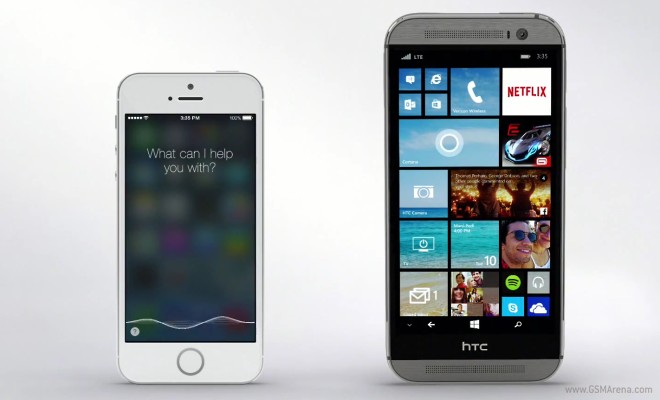
New Microsoft ad pits Cortana against Apple’s Siri

No comments:
In an effort to garner some interest for the as-yet underwhelming release of the HTC One M8 running Windows Phone, Microsoft has released a new ad on YouTube, highlighting their recently released Cortana voice assistant for Windows Phone.

Cortana is touted by Microsoft as being a complete virtual assistant, bringing the company’s Bing search capabilities and full-fledged organizational capabilities into a voice-activated package.
 
Continue Reading...

Microsoft given a deadline by Chinese government to respond to antitrust questions

No comments:

Microsoft given a deadline by Chinese government to respond to antitrust questions
In late July, Microsoft saw at least four of its offices in China get raided by government personnel, confiscating documents and computer hardware in what would later be confirmed to be part of an antitrust investigation.

The details of the investigation are still a little blurry, and for now it looks like the items of interest are “Windows and Internet Explorer,” quite the broad brush with which to paint a picture, and a song that Microsoft has heard before.

China’s State Administration for Industry and Commerce (SAIC) noted that its investigation was actually bigger, including Microsoft Office. SAIC also stated that Microsoft was not being “fully transparent” with its sales in China and sent a formal inquiry to Microsoft Vice President Chen Shi (aka David Chen). Microsoft has 20 days to provide a written response. Microsoft has stated from the beginning that it would “actively cooperate” with the investigation.

One of the complaints against Microsoft relates to the company’s use of verification codes which are utilized as an anti-piracy measure. Software piracy has been an ongoing problem for companies like Microsoft. Steve Ballmer once told China-based employees that Microsoft made less revenue in China than it did in the Netherlands. If you cannot draw a connection between verification codes and monopolistic behavior, you are not alone, “How does an anti-piracy measure constitute monopolistic behavior if other suppliers can also use the same technique?” asked Duncan Clark with BDA, a Beijing based tech-consultant.

The raids and subsequent investigation into Microsoft (along with 30 other foreign companies) were the latest actions in what many are seeing as protectionist measures being taken by China to shore up its own businesses. It recently stated that Google’s control over Android gives it unfair influence in China’s smartphone market and that Qualcomm has a monopoly in the microprocessor segment. The Chinese government has also blocked all government agencies from upgrading to Windows 8. Satya Nadella will be making a trip to China later this month.

All that activity is coupled with the Chinese government initiative called the OS Development Alliance, which is building its own operating system solely to compete with Apple, Google, and Microsoft, on the desktop, and in mobile. That platform is expected to make its debut in October.

sources: Reuters via Neowin and WPCentral
Continue Reading...

Monday, September 1, 2014

Cortana can tell you the time worldwide and compute currency calculations

No comments:
As the days go on, Cortana users learn more and more about the things that the personal assistant can accomplish. Some of these features are admittedly already available from Siri and Google Now. But Cortana users might not have thought about asking Cortana to handle these tasks. For example, let's say you are sitting in your living room in Orlando, Florida and you want to call your buddy Jean in Paris. Of course, you don't want to call at the wrong time and wake up your friend. So you can ask Cortana for the time in Paris and know for sure if it is okay to make that call.
Cortana turns U.S. dollars into British Pound
Another task that Cortana can accomplish, is the conversion of currency. Let's say you were offered a job that pays 1 million Japanese Yen. You might think that you've become a millionaire. But before you start bragging to friends and family, you should ask Cortana to convert Yen into Dollars. Perhaps you didn't know that currency fluctuates. Ask Cortana to convert 1 million Yen into U.S. Dollars and you will find out that your job is actually paying you under $9600.

Siri and Google Now have both been able to handle world time and currency conversions. But Windows Phone users have no reason to be jealous. After all, Cortana can handle the exact same tasks.

source: WPCentral          
Continue Reading...

Microsoft eliminates all but one chassis vendor for the Surface tablet line

No comments:

Microsoft eliminates all but one chassis vendor for the Surface tablet line
With buyers of the Microsoft Surface Tablet line not exactly knocking each other down in a race to the cash register, Microsoft has reduced the number of chassis suppliers for the tablet range to one. According to sources from the upstream supply chain, Microsoft stopped ordering the part from its Chinese-based suppliers last month. Instead, the manufacturer has started outsourcing all of its chassis orders to Ju Teng, a manufacturer located in Hong Kong.

Since the Surface is not a hot seller at the moment, Microsoft won't be able to save any money by spreading out orders for the chassis to multiple suppliers, and trying to negotiate a more favorable price amongst them. Sources say that Microsoft might try to reduce the number of suppliers for other Surface components to one.

Back in June, the Microsoft Surface Pro 3 was launched. The slate is being marketed as a replacement for the laptop, able to handle any work related tasks, while also allowing users to play games, browse the internet and check their social networks. That makes the slab perfect for business executives and students alike. Just last week, Microsoft expanded the distribution of the Surface Pro 3 to 25 new markets.
source: DigiTimes
Continue Reading...

9 ex-flagships that you can now buy as great mid-range smartphones

No comments:

9 ex-flagships that you can now buy as great mid-range smartphones
Have you noticed that it’s easier to find a perfect mid-range smartphone than a high-end one? That’s because, alongside all the new mid-range devices, you also have the option of buying a former flagship that’s old enough to be downgraded to the mid-range category. There are plenty of ex-flagships that can still provide a great user experience - assuming that you don’t necessarily need the very latest CPUs, or crazy screen resolutions that were unimaginable some years ago.

Of course, in addition to having more options to choose from, getting a mid-range smartphone also saves you money (though, as you’ll see, that’s not always the case). This being said, check out our selection of ex-flagships that can now be purchased as mid-range handsets, and let us know if there's any other device that we should've included in the list - which, by the way, is in alphabetical order.

Apple iPhone 4S

The iPhone 4S 8GB is Apple’s only smartphone that’s available for less than $500 off-contract. That, however, doesn’t mean it’s cheap: at $450, it’s still pretty expensive for what it’s offering - including a 3.5-inch display with 640 x 960 pixels. But, hey, that’s how Apple rolls.

Apple iPhone 4S review

Apple iPhone 4s

1.


2.

 BlackBerry Q10

If you’re a fan of old-school BlackBerries - with their great hardware QWERTY keyboards - the Q10 should be the first on your list of mid-range phones to consider buying. Released in the first half of 2013 for a hefty price, the Q10 can now be purchased for less than $300, either directly from BlackBerry, or from Amazon. Alongside a large QWERTY keyboard, the BlackBerry Q10 offers a 3.1-inch Super AMOLED display with 720 x 720 pixels, an 8 MP rear camera, dual-core Snapdragon S4 processor, 2 GB of RAM, and 16 GB of expandable internal memory. The Q10 runs BlackBerry 10 OS.

BlackBerry Q10

1.


2.

Google Nexus 4

Manufactured by LG, Google’s flagship smartphone form late 2012 may have its shortcomings (like the mediocre 8 MP camera and the somewhat fragile glass-based construction), but it’s undeniably a very good smartphone for its price - you can buy the 16 GB version, unlocked, for around $280 via Amazon.

Google Nexus 4

1.


2.

LG Optimus G Pro

Introduced in February last year, the Optimus G Pro was seen by many as being too big - and that’s because the handset sports a 5.5-inch 1080p display. Since then, however, extra-large displays have become more popular. If you don’t mind the fact that the Optimus G Pro is powered by the not-so-high-end Snapdragon 600 processor, you can buy the handset right now for around $300.

LG Optimus G Pro

1.

2.

Motorola Droid Maxx

The Motorola Droid line has been very successful at Verizon Wireless, and the Droid Maxx is one of the best smartphones in the series. The Droid Maxx is similar to the Droid Ultra, but adds a very large 3500 mAh battery, this being a bit thicker. You can get the Droid Maxx fro Verizon for $49.99 on contract, or $499.99 without any agreement.

Motorola DROID MAXX

1.

2.

Nokia Lumia 1020

It’s hard, if not impossible, to find a smartphone that can take better photos than the Nokia Lumia 1020. That’s because this Windows Phone handset (released about a year ago, and recently updated to Windows Phone 8.1) features a 41 MP camera with PureView technology, thus being able to capture incredibly detailed photos, and even videos. The problem - if we may put it this way - with the Lumia 1020 is that it still carries a premium price tag: Microsoft is selling the handset for $549.99. 

Nokia Lumia 1020

1.

2.

Samsung Galaxy S III

Yes, the Galaxy S III is still around, and it’s currently available for less than $300 unlocked. The S III was Samsung’s best selling smartphone in 2012, and won’t disappoint you if you think a 4.8-inch 720p display is enough for your mobile needs. 

Samsung Galaxy S III

1.

2.

Samsung Galaxy Note II

The Galaxy Note II was Samsung’s other flagship of 2012, being released in the second half of that year. The Note II built on the success of the very first Galaxy Note, offering more advanced features, an improved 5.5-inch display, and an enhanced S Pen experience. The Note II currently costs a tad under $400.

Samsung GALAXY Note II

1.

2.

Sony Xperia Z Ultra

Some say that the water-resistant Xperia Z Ultra is a phablet, though Sony announced it as an extra-large smartphone. The handset sports a 6.4-inch display with 1080 x 1920 pixels, and is only 6.4mm-thin. Unlocked, the Sony Xperia Z Ultra currently costs around $400.

Sony Xperia Z Ultra

1.

2.

Continue Reading...