Showing posts with label ios. Show all posts

Tuesday, August 26, 2014

A Month with the iPhone 5s: Impressions from an Android User

No comments:

Introduction

I must confess that the last time I used an iPhone was three or four years ago. While I’ve followed the hardware changes from generation to generation, I’ve never really been able to write about the iPhone or iOS in detail. While objective data is great to work with, a great deal of evaluation relies on subjective experience. To fix this gap in knowledge, I received an iPhone 5s. After a month, I’ve really come to have a much more nuanced view of how Android and iOS compare, along with how Apple’s iPhone compares to the rest of the smartphone market.
At this point, the iPhone 5s is a phone that doesn’t need much in the way of introduction. After all, it’s been almost a year since it was first announced, and Apple is ready to announce a new iPhone within the coming months if their yearly release cycle holds. For those that need a bit of a refresh on the iPhone 5s, I’ve included a spec table below.
Apple iPhone 5s
SoC Apple A7
Display 4-inch 1136 x 640 LCD sRGB coverage with in-cell touch
RAM 1GB LPDDR3
WiFi 2.4/5GHz 802.11a/b/g/n, BT 4.0
Storage 16GB/32GB/64GB
I/O Lightning connector, 3.5mm headphone
Current OS iOS 7.1.2
Battery 1570 mAh, 3.8V, 5.96 Whr
Size / Mass 123.8 x 58.6 x 7.6 mm, 112 grams
Camera 8MP iSight with 1.5µm pixels Rear Facing + True Tone Flash
1.2MP with 1.9µm pixels Front Facing
Price $199 (16GB), $299 (32GB), $399 (64GB) on 2 year contract

Hardware

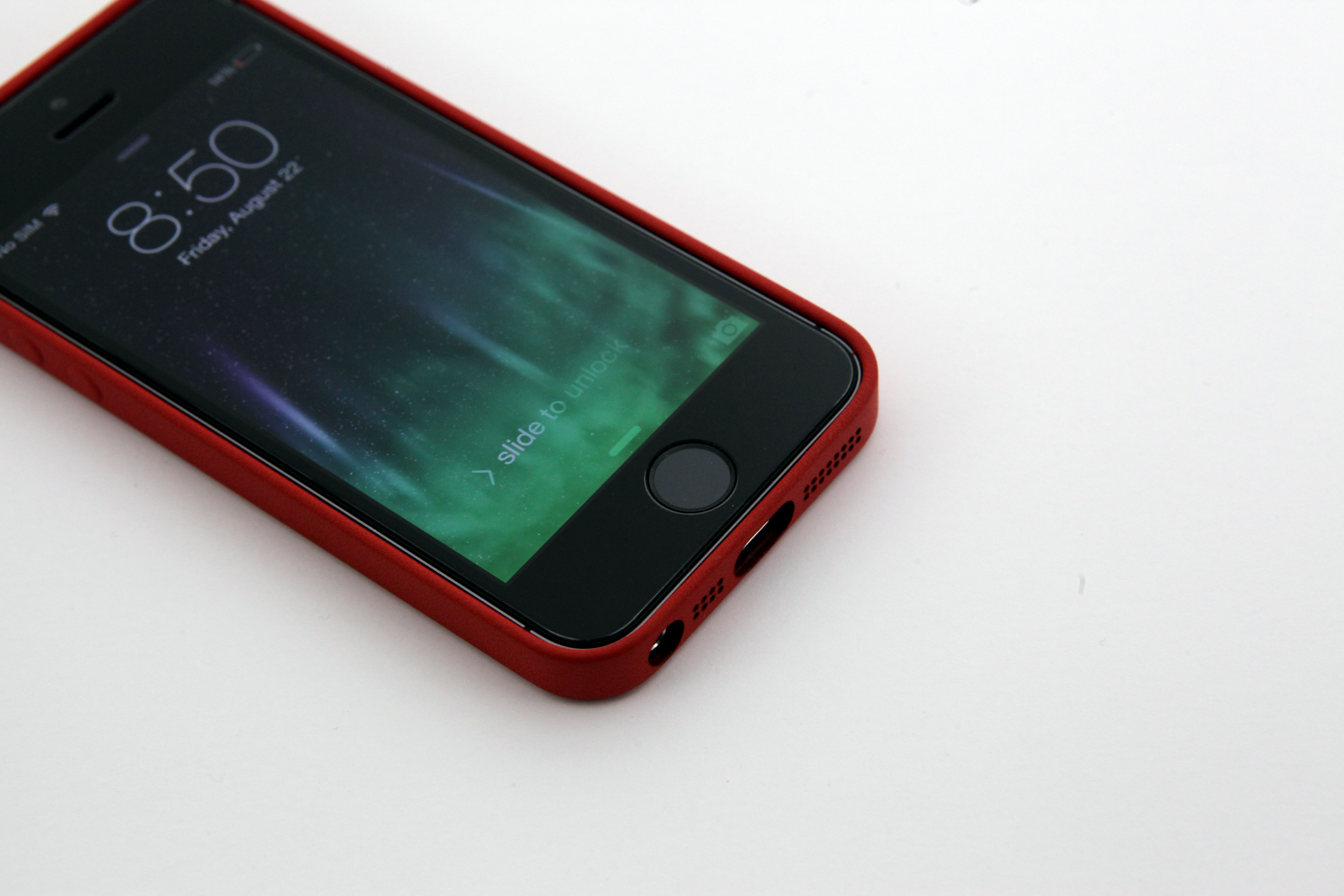
The hardware is ultimately the foundation that software rests upon, so it’s a good place to start. While it’s easy to appreciate industrial and material design by just holding or looking at the phone, everything else requires some real hands-on time. One of the first things I noticed was that the feel of the buttons. Normally, I expect buttons to have a bit of slack before they actuate. In all of the buttons on the iPhone 5s, this doesn’t happen at all. Instead, the button only depresses when triggered. In the case of the volume and power buttons, the activation gives a clean click. On most smartphones I’ve used, the feel and sound of this activation tends to be a bit more mushy and subdued. The home button is the one exception here, which has a noticeably longer travel and less distinctive actuation/mushier feel but I suspect that TouchID is the reason for this difference.
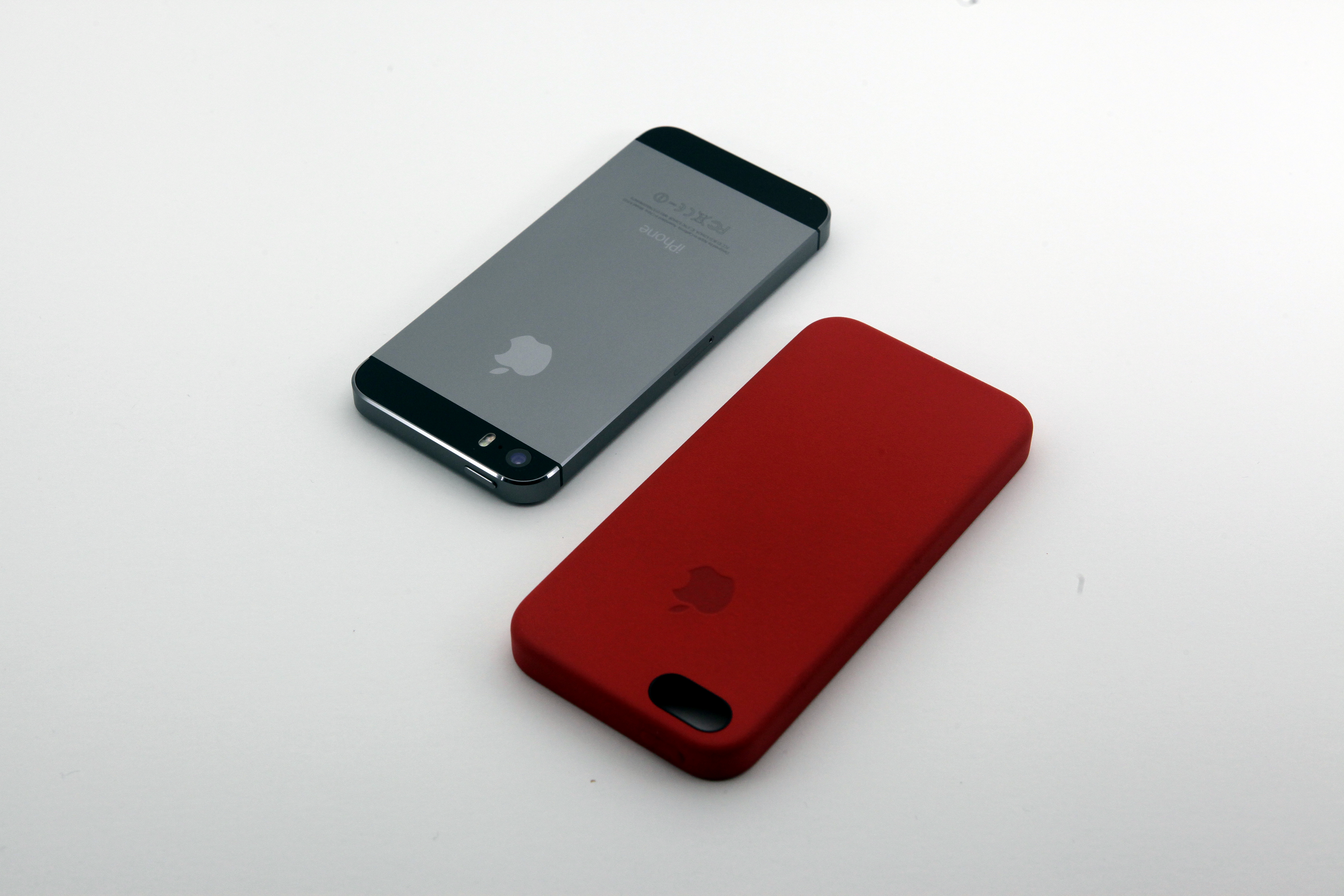
The other difference that I noticed was the size. For a long time now I’ve had the opinion that this generation of Android smartphones have simply gotten too big to be comfortably used with one hand. I still think that the limit for flagship smartphones (not phablets) is around a five inch display, and no larger than the smartphones that we saw in 2013. This includes devices like the Nexus 5, HTC One (M7), and Samsung Galaxy S4, which are all comfortable in the hand and relatively easy to manipulate. As a result, using the iPhone 5s is a significant departure. Reaching the top left corner of the display is relatively simple compared to some of the smartphones on the market today. While physical size is a matter of preference, I suspect that total device width shouldn't exceed 70-71mm, and height is probably shouldn't exceed 140-141mm, although there's a great deal of leeway as the shape of the phone can make a phone seem larger or smaller than it really is. In the case of the iPhone 5s, although the physical size is easy to handle I definitely notice the effect of the smaller display when trying to browse desktop websites, view photos, and watch videos. Anyone coming from Android at this point in time will probably miss the large displays that Android OEMs tend to integrate.
Of course, display is one of the biggest aspects of the smartphone experience, and is more than just a matter of size. In many measures, the iPhone 5s display is great. There’s no overly wide gamut, noticeable saturation compression, odd green tints in grayscale, or excessively high contrast/gamma. However, the resolution itself is noticeably lower than the 1080p and 1440p displays I’ve gotten used to. This doesn’t seem to affect usability much, but some elements of the UI like the rotation lock symbol are noticeably aliased. I find that around 400 to 500 DPI is generally acceptable to avoid obvious aliasing, but there’s value to going to 500-600 DPI for those that want to use a display for VR or are strongly sensitive to even minor aliasing at 4-6 inches viewing distance. Anyone coming from a phone like the Galaxy S4, G2, or One (M7) will probably notice the fuzzier display but it's probably not bad enough to grate on the eyes.
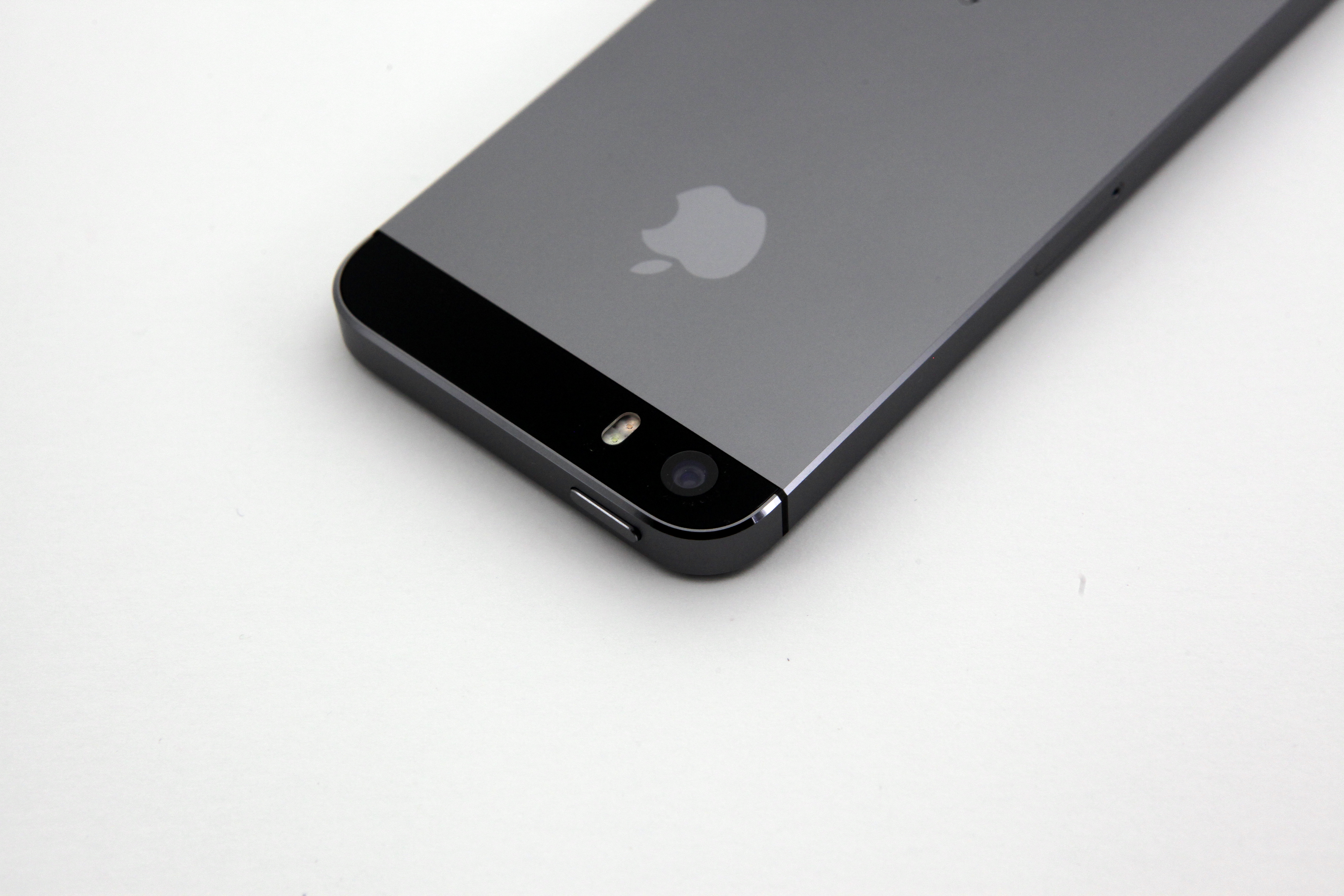
The camera is another major surprise for me. While I’m no optical engineer, it’s clear to me that the camera output is relatively free of smudging from aggressive luminance noise reduction, and the low light performance is much better as a result. I also don’t seem any odd color casts in low light, or noticeable color/chroma noise. Issues like sharpening kernels, halos from unsharp masks, and other artifacts from poor post-processing just aren’t present. In general, Apple has managed to ship a well-tuned camera that seems to be a step above. While I'd like to see a move to larger sensor sizes, it's likely that the thickness of the phone is a gating factor.
Finally, TouchID, the fingerprint sensor on the home button of the iPhone 5s, was a revelation. For reference, I’ve tried the fingerprint sensor on the One max, Galaxy S5 LTE-A, and Galaxy S5 T-Mobile USA. In practice, I would rank them in that order as well, with the One max’s almost 100% reliability to the Galaxy S5’s hit or miss reliability. In general, I’ve found that swipe-based fingerprint sensors can have a good experience on a smartphone, but in cases like both Galaxy S5 variants the ergonomics of swiping on a home button are less than ideal.
While I understood that TouchID was a better solution because of its press and hold nature, the truly compelling aspect of Apple’s implementation has more to do with software than anything. With the systems I’ve used before, enrollment was absolutely critical. Poor data during enrollment would basically make it impossible to actually use the fingerprint sensor. This isn’t true at all with TouchID. While I mapped the center of my fingers relatively well in initial enrollment, I left the extreme edges unmapped. This was easily resolved by slowly edging towards the very edges of my finger to get it to unlock based upon a partial match. In short, it has only gotten better and faster with time. There’s no deliberate effort needed to unlock the device normally at this point, especially because it’s as simple as pressing down the home button and unlock is almost instant for full matches.
In short, the attention to detail on the hardware side is one of the best I’ve seen in this industry. While I would like a larger display and higher pixel density, even now I find very little fundamentally wrong with the iPhone 5s. Of course, it’s not possible to ignore the software side of things. After all, installing Android on an iPhone 5s isn’t realistically possible. While iOS 7 has already been reviewed, for the most part such experiences have been evaluated from the perspective of people that have used iOS extensively through the years.

  source

Continue Reading...

Google releases a new office productivity app on iOS and updates two of its existing ones

No comments:
We already showed you a list of a number of Google apps and services that you can access from your iOS device, but it seems that this list has just become a tad longer. The search giant has just launched one of its fairly popular productivity apps on Apple's mobile platform – Slides. It joins the ranks of Google Docs and Google Sheets, which makes Google's productivity suite on iOS almost complete. Creating, editing, and sharing a presentation on the fly from any supported iOS device is now possible thanks to Slides.

But that is not the only novelty in the productivity department on iOS. Speaking of Docs and Sheets, Google has also polished and refreshed these two. The text-editing Docs has been updated with support for opening, editing, and exporting Microsoft Word files (“.docx/.doc”), while Sheets can do the same thing with Microsoft Excel files (“.xlsx/.xls”). The latter also now allows its users to view charts, insert various formulae into them, as well as make use of the find and replace feature for each and every chart.

These are some pretty neat and substantial additions to the productivity apps, which brings them almost on par with Microsoft's own Office Mobile app on the App Store. You can go ahead and download Slides from the links below for free, which is the usual case with Google.

Download:
  • Google Slides (iOS) 
  • Google Docs (iOS) 
  • Google Sheets (iOS) 

1.

2.

3.

4.

5.

6.

7.

8.

9.

10.

11.

12.


via: AppleInsider
Continue Reading...

Monday, August 25, 2014

TSMC is ahead of schedule on production of 16nm wafers expected for next year's iPhone

No comments:

TSMC is ahead of schedule on production of 16nm wafers expected for next year's iPhone
With Samsung breathing down its back, TSMC is now planning on producing 50,000 wafers a month using its 16nm process during the first quarter of 2015. The wafers were originally scheduled to be produced in the second quarter of next year, and will be employed in the production of the Apple A9. The latter is the SoC that should be used on next year's version of the Apple iPhone and Apple iPad.

Apple is expected to eventually become TSMC's largest customer. But last month, KGI Securities analyst Michael Liu told his clients that Samsung will be taking the reigns back from TSMC in the second half of 2015, with the production of 14nm chips. TSMC started delivering the A8 chip for the Apple iPhone 6 last quarter. Speculation has the A8 running at 2GHz, the first chip in the series to hit that mark.

As if the back and forth between TSMC and Samsung weren't confusing enough, TSMC CEO Morris Chang said that his company will bounce back in 2016. Since the chips are made to Apple's specs, it shouldn't matter to consumers which foundry the SoC comes from.

source: EconomicDailyNews (translated) via DigiTimes
Continue Reading...

Sunday, August 24, 2014

Doctors speak out against Apple's HealthKit

No comments:

Doctors speak out against Apple's HealthKit
Apple's HealthKit will help you monitor certain metrics captured by sensors found on the iPhone, third party fitness wearables, and the Apple iWatch (whenever it gets released). But is it really a good idea for the public to so easily have access to readings such as heart rate, blood pressure and even blood glucose? There are many Doctors who believe that the answer is "no."

One such M.D. is Dr. Dushan Gunasekera, whose practice is in London. His concern is that the accuracy of the information cannot be guaranteed. As a result, he does not see any reputable Doctor as being able to look at your phone to make a proper diagnosis. He also worries about the interpretation of the readings by the general public. "There is certainly a risk that people will see a sharp dip in one of their graphs, and interpret that as a big problem, when in fact the reading could still fall within a normal range," said the Doctor.

Add to that worry, a concern from Dr. Rakesh Kapila. He is another London based Doctor, who was trained by the Mayo Clinic in the U.S. Dr. Kapila fears that HealthKit users could develop an unhealthy obsession with the readings. He suggests that HealthKit and other health related apps, tell users when their readings suggest that further action is required. This will prevent users from having their imagination blow up a minor ailment into a terminal illness.

There are some people that will benefit greatly from HealthKit, says Dr. Gunasekera. Diabetics might be able to monitor their blood glucose readings without having to draw blood each time. Certain sensors can be implanted under the skin that would send continuous readings to HealthKit, which can then warn diabetics if their glucose reading is too high, requiring an injection of insulin. Perhaps more importantly, an alarm can go off if a user's glucose reading is too low, which could lead to the insulin-dependent diabetic passing out. This warning would give the user time to consume a sugary drink or food, in order to prop up his glucose reading.

Pregnant women are another group that could benefit from a health related app. Monitoring the heart rate could help determine if the fetus is doing well.

What needs to be avoided are users treating their health readings as  stock prices, with their emotions changing with every up and down tick. A little bit of knowledge can be dangerous when it comes to your health.

"When iOS 8 is launched, Apple will need to make an effort to show users what [HealthKit users] should be aiming for, failing that a patient’s doctor will have to… technology is certainly not yet at the point where it can replace a real doctor. The human body is a complex object that changes from day to day and from hour to hour. Being so complex means that it will take a trained professional to look at all of your stats to make a diagnosis if something is wrong. Apple needs to make it clear that a Health app isn’t a replacement for regular checkups, it is instead a way of monitoring some of your stats in-between appointments that can affect your overall health."-Dr. Dushan Gunasekera

source: Forbes
Continue Reading...

Friday, August 22, 2014

Find Out If You Have A Heart Condition Using Your Smartphone

No comments:
 

ecg line
Health should be everyone’s number one priority. Or life span here on earth isn’t that long, so we have to be sure to maintain a healthy body. One important aspect of the human body is the heart. We all know what that bad boy does, so there is no need for me to explain. I personally do not mean to scare you, but did you know
Continue Reading...

ComScore Report: 65.5% of smartphone users don't downlaod a single application in a month as Mobile surpasses Desktop

No comments:
google play store nexus 5 2
It’s 2014 and most of us have traded our focus away from the PC and towards mobile devices. In the latest report from ComScore, we learn that the majority of all digital media time now occurs on mobile apps, with desktop taking a backseat.
Continue Reading...

How to record phone calls

1 comment:

With all the recent kerfuffle over Comcast's horrendous customer service (and the recorded calls that let the world share in the unpleasantness), it stands to reason you might wonder how to record a phone call of your own.
Continue Reading...

Reuters: last-minute iPhone 6 screen redesign puts production in a frenzy, might affect supply at launch

No comments:

Reuters: last-minute iPhone 6 screen redesign puts production in a frenzy, might affect supply at launch
After issues with manufacturing of the super-thin new iPhone display packages, a deeper problem has been putting Apple's supply chain in a frenzy to meet deadlines, just a few weeks before the grand iPhone 6
Continue Reading...

Here's how big the iPhone 6 may be compared to most other flagships

No comments:

Here's how big the iPhone 6 may be compared to most other flagships
Even those who are only remotely interested in the phone industry must have been reached by the hype that's started to build around the upcoming Apple iPhone 6. Apple's next-gen smartphone is expected to
Continue Reading...